
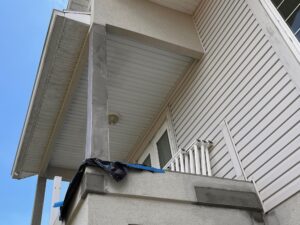
A lot of stucco repairs that fail were not caused by bad workmanship on the surface. They were caused by a mix that was wrong from the start, and the problem does not usually show up until months later.
What the Mix Ratio Actually Controls
Stucco mix ratio affects how the repair cures, how flexible it stays, and how well it bonds to the surrounding original material. A mix that is too rigid compared to the existing stucco can crack right along the edge of the repair once the house naturally shifts with temperature and humidity. A mix that is too weak will not hold up to the same weather the rest of the wall has already survived. Learn more about How to Tell If a Stucco Crack Needs a Patch or a Full Section Replacement
How a Bad Mix Shows Up Months Later
This is what makes it a frustrating problem for homeowners. A poorly mixed repair often looks fine the day it is finished. The failure shows up weeks or months later as a hairline crack forming exactly along the patch line, or as the patch pulling away slightly from the original stucco. By the time it is visible, the repair usually has to be redone from scratch instead of touched up.
Knowing when a repair actually needs a full section replacement instead of a patch is the first decision to get right, which the companion page on this pair covers. For our full stucco repair process, visit our stucco repair page, or see real results on our Google Business Profile.