
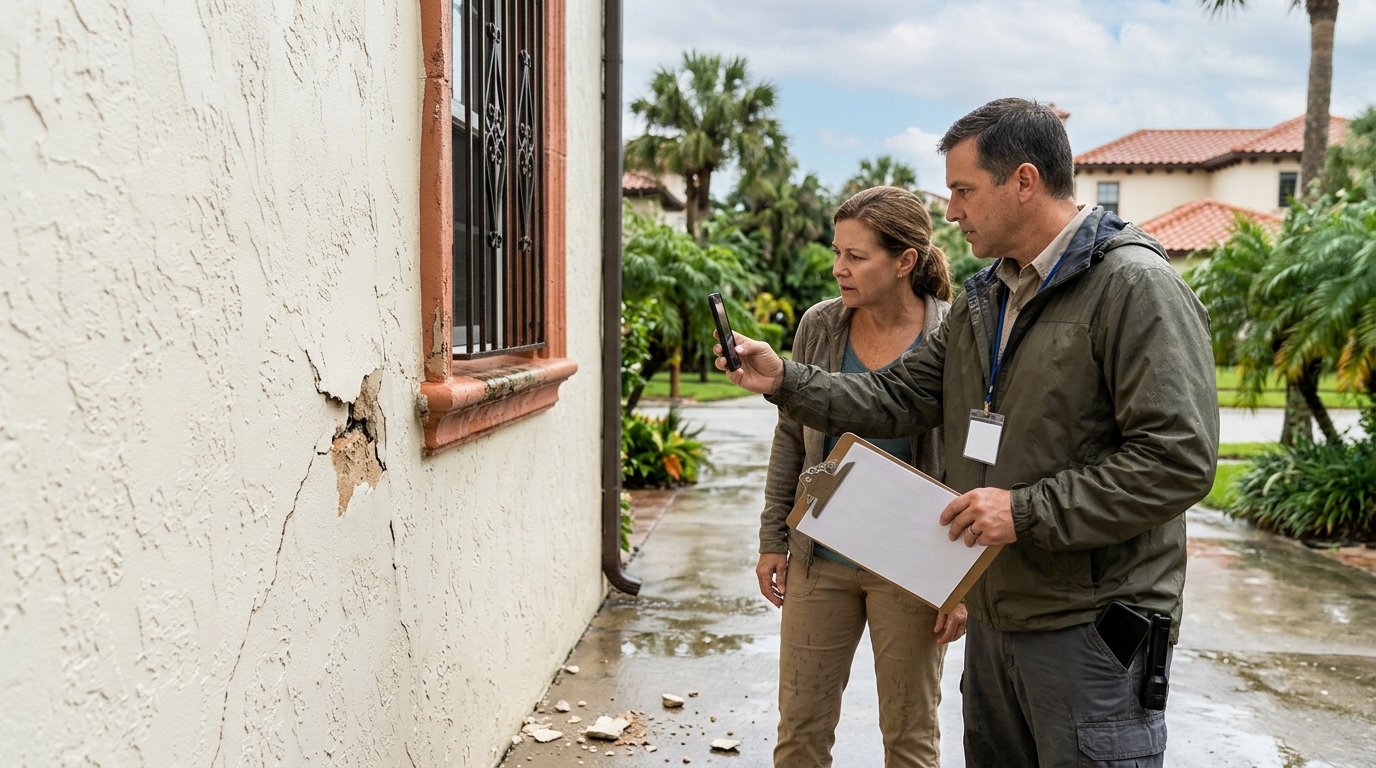
Navigating property insurance claims in Northeast Florida can feel complex, especially when dealing with exterior walls. For homeowners in St. Augustine where coastal storms, driving rain, and intense humidity constantly test building exteriors discovering cracks, stains, or water intrusion often brings up an urgent question: Does homeowners insurance cover stucco damage?
Because policy wording, coverage limits, and deductible structures vary widely across Florida insurance providers, understanding how policies generally distinguish between sudden storm events and long-term wear and tear is essential before you file a claim.
Storm Damage vs. Wear and Tear: The Core Distinction
When evaluating stucco damage claims, Florida insurance carriers generally divide exterior issues into two distinct categories:
1. Covered Perils (Sudden and Accidental Damage)
Standard homeowners insurance policies (such as HO-3 policies) typically cover damage caused by sudden, accidental “perils” listed in the policy.
- What it includes: Physical damage directly resulting from severe weather events, such as windstorms, hurricanes, windblown debris cracking or punching holes in exterior walls, or falling tree limbs striking the side of a home.
- Why it’s covered: These incidents are sudden, unforeseen, and beyond regular homeowner maintenance.
2. Excluded Perils (Gradual Deterioration and Maintenance)
Insurance is designed to protect against sudden disasters, not to cover the costs of home maintenance or gradual aging.
- What is excluded: Damage resulting from lack of maintenance, normal settling cracks, chronic moisture intrusion over many years, poor original installation, manufacturing defects, or wood rot and mold caused by neglected seals.
- Why it’s excluded: Standard policies explicitly exclude gradual wear and tear, meaning homeowners are responsible for routine upkeep, caulking, sealing, and painting.
When Might Stucco Damage Qualify for Coverage?
If your stucco sustains physical trauma during a named storm or severe weather event common to St. Johns County, your policy may provide coverage depending on your deductible structure.
Examples of situations that frequently prompt insurance review include:
- Wind-driven impact: Flying debris during a coastal squall or hurricane striking and cracking the stucco surface.
- Structural shifting from a covered event: Sudden ground movement or wind loads that cause structural framing to warp and crack exterior finishes.
- Water entry following storm damage: If high winds tear off roof shingles or flashing, allowing water to infiltrate and ruin interior walls and exterior stucco assemblies directly behind the breach, the resulting damage may be tied to the initial storm event.
Key Steps to Take Before Filing a St. Augustine Insurance Claim
If you suspect your stucco has been damaged by a recent storm rather than normal aging, approaching the situation methodically helps protect your interests:
- Review your policy declarations: Check your specific policy language, endorsements, exclusions, and your hurricane or windstorm deductible (which in Florida is often a percentage of your home’s insured value rather than a flat fee).
- Document the damage thoroughly: Take clear, dated photographs and videos of the affected stucco areas from multiple angles. Capture wide shots showing the location on the house as well as close-ups of specific cracks, impact points, or water staining.
- Mitigate further damage: Under most Florida policies, homeowners have a duty to prevent additional damage. If a storm tore away protective barriers or flashing, take temporary, reasonable steps (such as tarping) to stop active water intrusion while awaiting inspection.
- Consult an independent professional: Having an experienced stucco repair St. Augustine specialist inspect your walls can help you determine whether the damage stems from acute storm impact or long-term weathering, giving you a clearer picture before contacting your insurer.
Frequently Asked Questions
Does Florida homeowners insurance cover hairline cracks in stucco?
Generally, no. Small hairline cracks caused by normal thermal expansion, contraction, or minor home settling are considered standard cosmetic maintenance and are the homeowner’s responsibility.
What is a hurricane deductible in Florida?
In Florida, a hurricane or windstorm deductible is a separate, specific deductible (often ranging from 2% to 5% or more of your home’s insured structure value) that applies instead of your standard deductible when damage is caused by a declared hurricane or windstorm.
Will filing a claim cause my insurance rates to increase?
Insurance rate adjustments depend on multiple factors, including state-wide market conditions, your claims history, and your specific insurer. In Florida, filing a property claim can sometimes influence future premiums or renewal terms, which is why evaluating the cost of repairs against your deductible amount is important.
Can an insurance company deny a claim due to “deferred maintenance”?
Yes. If an adjuster or independent inspector determines that stucco cracking or water damage occurred gradually over time due to unsealed gaps, failed caulking, or neglected roof leaks, the insurer will typically deny coverage under the wear-and-tear exclusion.
Who should I contact first if my stucco is damaged?
Review your policy documents first to understand your coverage parameters and deductibles. Many homeowners consult a licensed contractor for an initial assessment to understand the scope of the damage before formally filing a claim with their insurance carrier.