
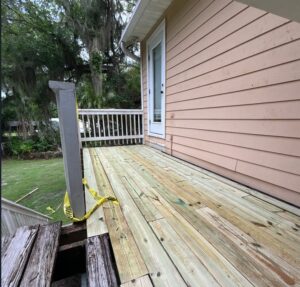
A lot of homeowners assume a deck is small enough to skip the permit process. Depending on the size and height of the deck, that assumption can turn into a real problem later, especially when it comes time to sell the home.
When a Permit Is Required and When It Isn’t
Generally, any deck attached to the home, or one that is elevated above a certain height, requires a building permit in St. Augustine and the surrounding county. Smaller, freestanding, ground level structures sometimes fall under exceptions, but the threshold is easy to misjudge without checking first. Permit requirements also cover things like railing height and structural attachment points, which matter for safety as much as they do for paperwork. Learn more about Learn more about Wood or Composite Decking, Which One Actually Handles Florida Humidity Better?
What Happens If You Skip the Permit
An unpermitted deck can become a real problem during a home sale, since it often has to be disclosed and can hold up closing until it is either permitted after the fact or removed. It can also affect homeowners insurance if a claim ever involves the deck. Pulling the permit upfront, as part of the build, avoids all of that, and a licensed contractor typically handles this step as part of the project rather than leaving it on the homeowner.
Permits matter, but so does what the deck is actually built from. If you are still deciding between materials, the companion page on this pair covers that comparison. For our full deck building process, visit our deck building page, or see completed decks on our Google Business Profile.