
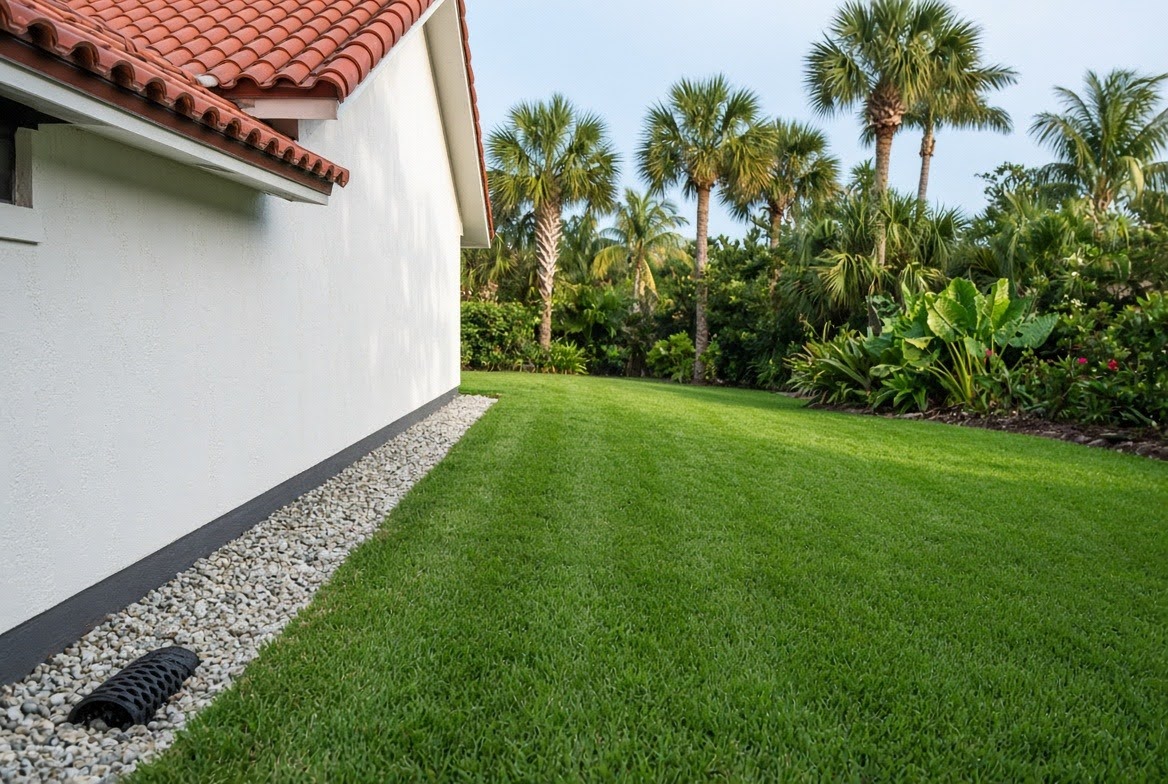
If you walk out into your backyard after a heavy overnight storm in neighborhoods like Anastasia Island, Lincolnville, or parts of World Golf Village and notice your shoes sinking into a soggy lawn, you are dealing with a classic coastal drainage puzzle. Local community threads on neighborhood subreddits are full of homeowners venting about standing water pooling near their back patios or creeping toward their crawlspaces. When planning a proper French drain installation St. Augustine property owners quickly realize that standard DIY trenching guides do not apply here because of our unique regional soil and moisture conditions. Consulting with a st augustine fl general contractor ensures your site drainage project complies with local environmental and building standards.
Dealing with a shallow subsurface water level means underground trenches behave completely differently than they would in drier inland regions.
Why Standard Trenching Fails Against a High Water Table St. Augustine
In many parts of the country, a French drain relies on gravity to pull water downward through a perforated pipe away from low spots. However, when managing a high water table St. Augustine yards often sit only inches or feet above the saturation line. If you dig a standard trench and bury a pipe without accounting for this subterranean pressure, the trench simply fills up like an underground swimming pool rather than draining water away.
To make subsurface drainage actually function on saturated coastal lots, local contractors make specific engineering tweaks:
- Shallow Slopes and Outfall Adjustments: Designing precise gravity fall lines when your overall lot grade is nearly flat requires laser-leveled trenching to ensure positive flow toward street swales or designated discharge points.
- Aggressive Gravel Envelopes: Wrapping perforated pipes in non-woven geotextile fabric and surrounding them with clean washed stone prevents fine coastal sand from silting up the system.
- Trench Depth Calibration: Keeping trenches shallow enough to intercept surface saturation zones without hitting standing groundwater prematurely.
Solving Soggy Turf and Hydrostatic Pressure Problems
When sub-surface moisture has nowhere to go, it creates ongoing hydrostatic pressure against stem walls and walks, leading to damp crawlspaces and dying turf grass. Integrating a properly engineered subterranean trench system captures lateral surface runoff before it wrecks your landscaping.
Partnering with reliable general contractor st augustine professionals ensures your perimeter setup works with regional soil saturation levels instead of fighting against them. Learn more about French Drain vs Sump Pump for Florida Yard Drainage
Frequently Asked Questions
Why is my yard still soggy even though I installed a gravel trench?
If your trench is dug below the local saturation line, water will rise up into the gravel bed rather than flowing away. Proper outfall grading and depth management are essential.
Can a sub-surface trench connect directly to city storm drains?
Connection regulations vary across St. Johns County and city limits. Most residential systems discharge into private yard swales, retention easements, or approved street runoff paths.