
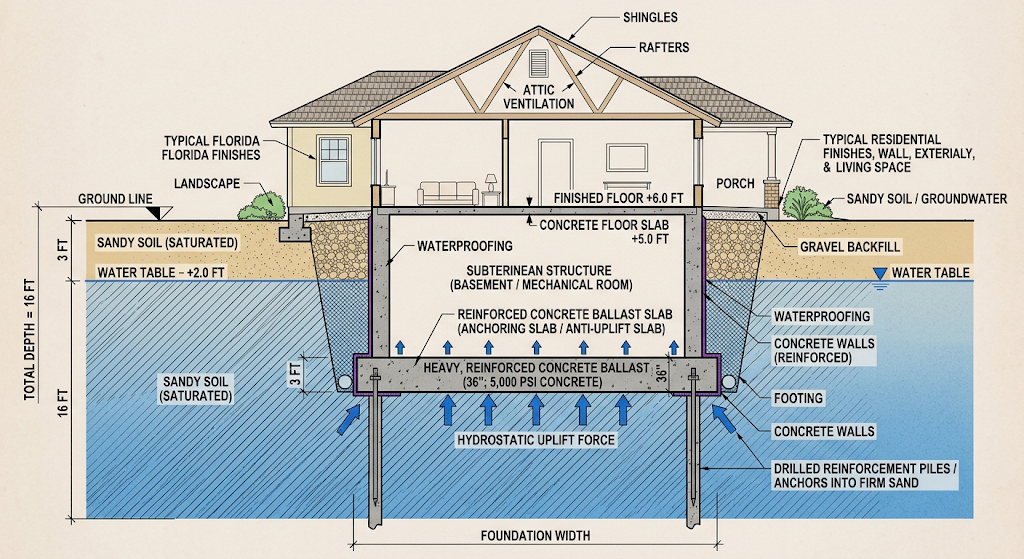
Scrolling through local neighborhood forums or Florida-focused subreddits often reveals a common piece of advice when newcomers ask about building a basement or subterranean wine cellar: “You can’t dig down in Florida because you’ll hit water immediately.” While that sounds like an exaggeration, anyone who has tried to dig a deep post hole in St. Augustine or surrounding St. Johns County knows just how quickly muddy groundwater fills the hole. Hiring a residential general contractor with experience in coastal soil conditions is essential when planning any heavy foundation work in these areas.
Managing a high water table St. Augustine property owners face dictates every single decision when planning sub-surface additions, foundation retrofits, or secure subterranean construction Florida builds.
When the earth beneath your lawn remains saturated just a few feet below the surface, putting heavy concrete structures underground requires specialized engineering to prevent structural shifting or floating.
Navigating Engineering Challenges for Subterranean Construction Florida Projects
Unlike inland regions with deep, dry bedrock, coastal Florida’s sandy soils and shallow water table create intense hydrostatic uplift pressure. If you attempt standard underground construction Florida projects without accounting for buoyancy, an empty underground vault or shelter can literally pop out of the ground like a cork in a bathtub during heavy rainy seasons.
To build safely below grade, local contractors rely on specific structural methods:
- Continuous Dewatering Systems: Utilizing temporary or permanent well-point systems to lower groundwater levels during excavation and foundation pouring.
- Heavyweight Ballast Slabs: Pouring thick, heavily reinforced concrete floor mats that use sheer weight to anchor structures against upward water pressure.
- Multi-Layer Waterproofing Membranes: Applying exterior liquid membranes, bentonite clay sheets, and heavy-duty vapor barriers to stop moisture intrusion permanently.
Protecting Your Investment Against Subsurface Moisture
Ignoring regional soil saturation leads to chronic leaks, mold growth, and eventual wall buckling. Whether you are retrofitting a secure storage space or planning a specialized below-grade structure, working closely with licensed general contractors ensures your foundation withstands coastal hydrostatic pressure year-round. Learn more about Storm Shelter vs Safe Room: What St. Augustine Homeowners Actually Need
Frequently Asked Questions
Can you build a traditional underground basement in St. Augustine?
True subterranean basements are extremely rare in Florida due to the high water table and sandy soil composition. Most homes are built on monolithic slabs or stem walls instead.
How do engineers stop underground rooms from floating in wet soil?
Engineers anchor subterranean structures using heavy reinforced concrete ballast slabs, structural tie-downs, and continuous perimeter drainage pumps to neutralize hydrostatic uplift.