
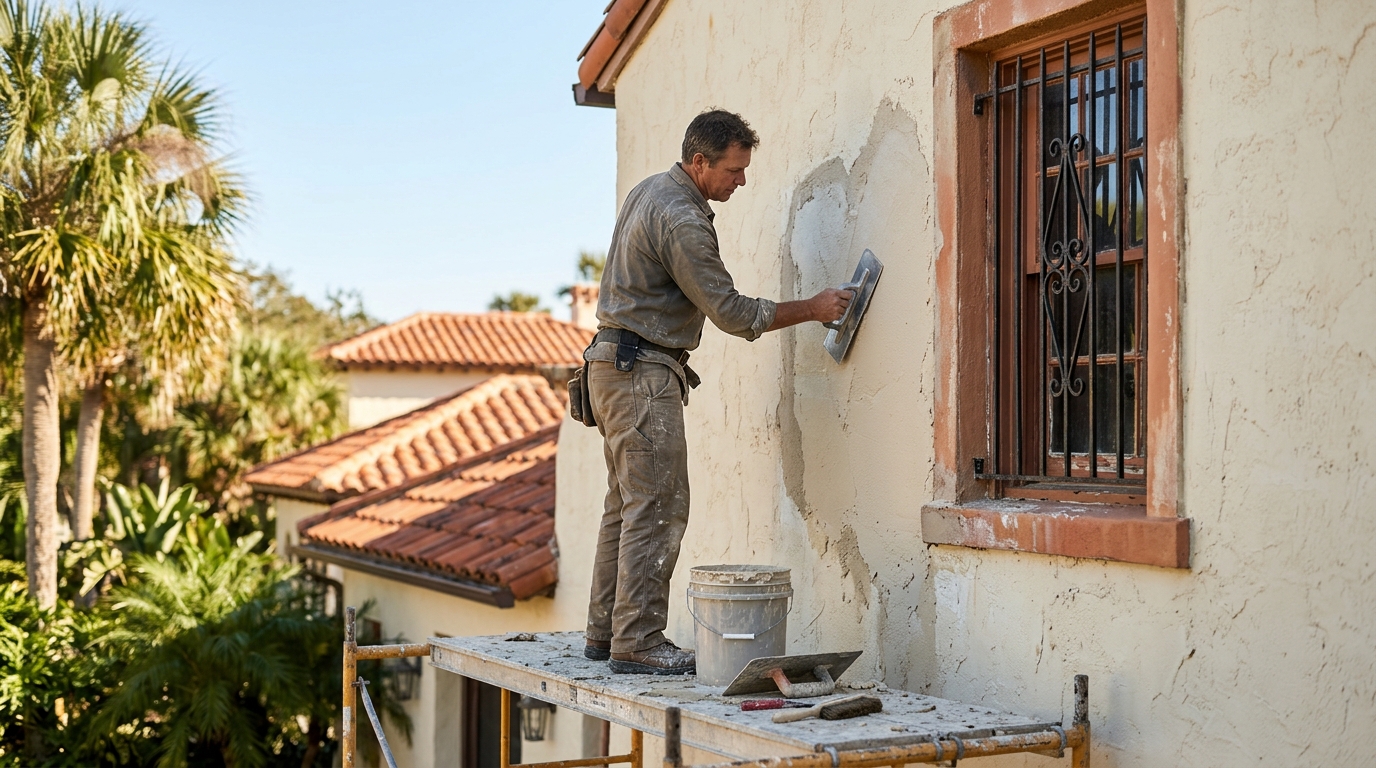
When planning home maintenance or exterior renovations in St. Augustine, timing matters just as much as the quality of the materials. Because Northeast Florida experiences intense humidity, frequent summer downpours, and high seasonal heat, timing your exterior projects around the local weather ensures proper curing and long-lasting durability.
Whether you are addressing hairline cracks, surface patching, or larger exterior restorations, understanding the best time to repair stucco Florida contractors recommend helps you protect your St. Johns County home from weather-related setbacks.
Why Climate and Season Matter for Stucco Repairs
Stucco is a cement-based material that relies on a precise chemical hardening process known as hydration. It does not just “dry” out; it cures through a chemical reaction between water and cement compounds.
In Northeast Florida, ambient temperature, humidity levels, and rainfall directly interfere with this delicate curing balance:
- Excessive heat causes moisture to evaporate far too quickly from fresh stucco, leading to dry shrinkage, cracking, and a weakened bond.
- Heavy rainfall or high humidity can saturate wet patches, disrupt the water-to-cement ratio, and prevent proper hardening.
The Best Seasons for Stucco Repair in Northeast Florida
1. Late Fall through Early Spring (The Ideal Window)
From November through March, Northeast Florida enjoys moderate daytime temperatures (typically in the 60s and 70s) and significantly lower relative humidity.
- Why it works: Mild temperatures provide the optimal environment for cement hydration, allowing patch work and new coats to cure at a steady, even pace without overheating or premature drying.
- Lower storm risk: This period aligns with Florida’s drier dry season, minimizing the chance of sudden afternoon thunderstorms washing out fresh repairs.
2. Spring (A Viable Secondary Window)
Early spring (April to May) offers comfortable working conditions before the heavy summer heat and tropical humidity set in. Scheduling exterior repairs during this window allows your stucco to fully cure and seal before the rainy season arrives.
3. Summer (The Most Challenging Season)
While stucco repairs can still be performed during summer (June through September), it requires strict precautions due to daily torrential downpours, blistering heat, and extreme humidity. Contractors working in summer must frequently mist fresh patches to slow down rapid evaporation and protect wet walls from sudden afternoon storms.
Key Weather Factors to Monitor
If you are planning a stucco repair project in St. Augustine, keep these environmental conditions in mind:
- Temperature Range: Ideally, exterior stucco work should be done when temperatures stay consistently between 50°F and 90°F.
- Rain Protection: Fresh stucco must be shielded from rain for at least 24 to 48 hours to prevent washouts and surface pitting.
- Moisture Management: Ensuring the underlying substrate is stable and dry before applying new material prevents trapped water from compromising the patch.
Working with an experienced stucco repair contractor ensures that weather forecasts are factored directly into your project schedule, protecting your investment year-round.
Frequently Asked Questions
Can stucco repairs be done during Florida’s rainy season?
Yes, but with caveats. Emergency repairs can be performed during the summer rainy season by using protective tarps, scaffolding enclosures, and quick-setting formulas, but dry weather windows are always preferred for standard patches.
What happens if fresh stucco gets rained on?
If fresh stucco is exposed to heavy rain before it has properly set and cured, the water can wash away cement paste, pit the surface texture, weaken the bond, and cause discoloration or cracking.
How long does stucco take to cure after a repair?
While initial setting happens within a day, cement-based stucco typically requires several days of moist curing (or proper misting) to achieve its full structural strength and durability.
Is winter too cold for stucco repairs in St. Augustine?
Rarely. While northern states experience freezing temperatures that halt masonry work completely, St. Augustine’s mild winter temperatures (rarely dipping below freezing) make it the most favorable time of year for exterior stucco projects.
How do I know if my stucco needs immediate repair regardless of the season?
If you notice active water leaks, soft or crumbling sections, deep structural cracks, or bulging stucco, do not wait for a specific season. Addressing structural vulnerabilities promptly prevents water intrusion from damaging the framing beneath your walls.