
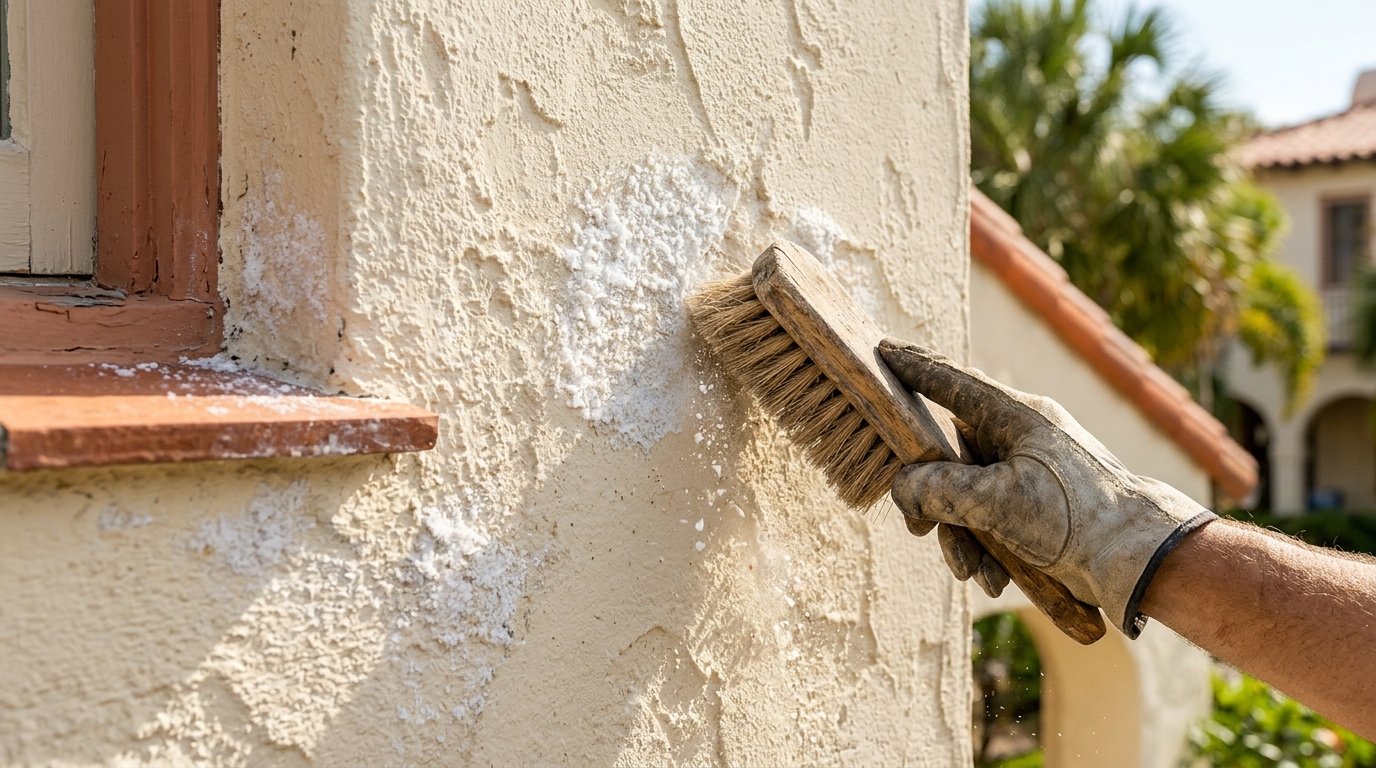
Noticing a crusty, white powdery substance on your exterior walls can be alarming. For homeowners in St. Augustine where historic properties, coastal moisture from Vilano Beach, and heavy summer downpours create a unique environment seeing this chalky residue on exterior walls is a common occurrence.
When that white powder appears, understanding what efflorescence on stucco actually means helps you determine whether it is just a minor cosmetic nuisance or a sign that moisture is moving through your walls.
What Is Efflorescence?
Efflorescence is not a mold, mildew, or paint failure. Chemically speaking, it is a crystalline deposit of water-soluble salts.
Stucco, mortar, concrete blocks, and brick all contain natural mineral salts and lime. When moisture gets inside these building materials due to rain, humidity, or dew it dissolves those internal salts. As the moisture migrates outward to the surface of the stucco and evaporates into the air, it leaves behind those dissolved minerals as a dry, white, powdery or crusty crystalline crust.
Why Does Efflorescence Happen on St. Augustine Stucco?
Three primary ingredients must be present for efflorescence to form: soluble salts within the wall materials, moisture to dissolve them, and a pathway (plus evaporation) to bring them to the surface. St. Augustine’s climate provides ideal conditions:
- High humidity and frequent rainfall: Northeast Florida’s moisture-laden air and heavy seasonal storms constantly supply the moisture required to activate and dissolve salts within stucco walls.
- Porous nature of stucco: Traditional stucco is porous, meaning moisture can naturally absorb into the outer layers before evaporating back out.
- Coastal environment: Salt air and moisture cycles around coastal zones can contribute to mineral content on exterior surfaces.
Is Efflorescence a Serious Problem?
In most cases, light efflorescence is primarily an aesthetic issue rather than a structural emergency. It looks unsightly, but the powdery deposit itself does not eat away at the stucco or cause structural decay.
However, you should not ignore it. While the white powder is harmless, the moisture causing it is the real concern. If efflorescence is appearing continuously or heavily in the same spot, it indicates that water is actively traveling through your wall assembly. Left unmanaged, persistent moisture movement can eventually lead to cracking, staining, or breakdown of the stucco system.
How to Remove Efflorescence From Stucco
Removing surface efflorescence is relatively straightforward if done correctly:
- Dry brushing: For light, powdery deposits, scrubbing gently with a stiff-bristled, non-metallic brush can remove loose crystals without harming the stucco finish.
- Low-pressure washing: Rinsing the wall with clean water can clear away surface residue. Avoid high-pressure power washing, as excessive force can etch, gouge, or crack traditional stucco.
- Mild cleaning solutions: For stubborn deposits, specialized masonry cleaners or mild, pH-balanced cleaning solutions designed for stucco can break down mineral bonds safely. Always test a small, inconspicuous area first.
Preventing Future Efflorescence
Because moisture is the engine behind efflorescence, stopping the white powder from returning requires cutting off excess water migration:
- Seal hairline cracks promptly: Inspect your stucco regularly for small cracks or gaps around windows and doors where rainwater can enter.
- Maintain proper exterior coatings: Applying high-quality, breathable elastomeric paint helps seal the stucco surface against excessive moisture absorption while allowing trapped vapor to escape.
- Check home drainage: Ensure that gutters, downspouts, roof overhangs, and landscape grading direct rainwater away from your exterior walls rather than pooling against them.
When efflorescence keeps returning despite your cleaning efforts, or if you notice bubbling paint, damp patches, or crumbling stucco, it is time to bring in a professional. Working with an experienced St. Augustine stucco repair contractor ensures that underlying moisture sources are accurately diagnosed and resolved before minor cosmetic issues turn into major repairs.
Frequently Asked Questions
Is the white powder on my stucco mold or mildew?
No. Mold and mildew are living organic fungi that typically appear as dark green, black, or grey spots and thrive in damp, shaded areas. Efflorescence is a dry, mineral-based salt deposit left behind by evaporating water and is completely inorganic.
Can I just paint over efflorescence?
Painting over active efflorescence without cleaning it first is not recommended. The salts will continue to push outward behind the new paint film, causing bubbling, blistering, and peeling within a short time. The surface must be thoroughly cleaned, dried, and treated first.
Why does efflorescence disappear when it rains, then come back?
Rain temporarily dissolves or washes away surface salt crystals, making them invisible while the wall is wet. However, as the sun comes out and the wall dries, more moisture inside the stucco draws additional dissolved salts to the surface, recreating the white powdery haze.
Does efflorescence mean my stucco was installed incorrectly?
Not necessarily. Even perfectly installed stucco can develop efflorescence because all cement-based masonry naturally contains soluble salts, and Florida’s high humidity provides plenty of ambient moisture for the process to occur. However, heavy or localized efflorescence can point to specific water leaks, such as a missing flashing or a plumbing leak behind the wall.
When should I call a professional for stucco efflorescence?
If you can easily brush off light powder and the wall underneath is solid and dry, it can usually be handled as routine maintenance. If the efflorescence is thick, crusty, keeps returning immediately, or is accompanied by soft stucco, cracking, or water stains, you should contact a professional to inspect the wall for hidden moisture intrusion.