
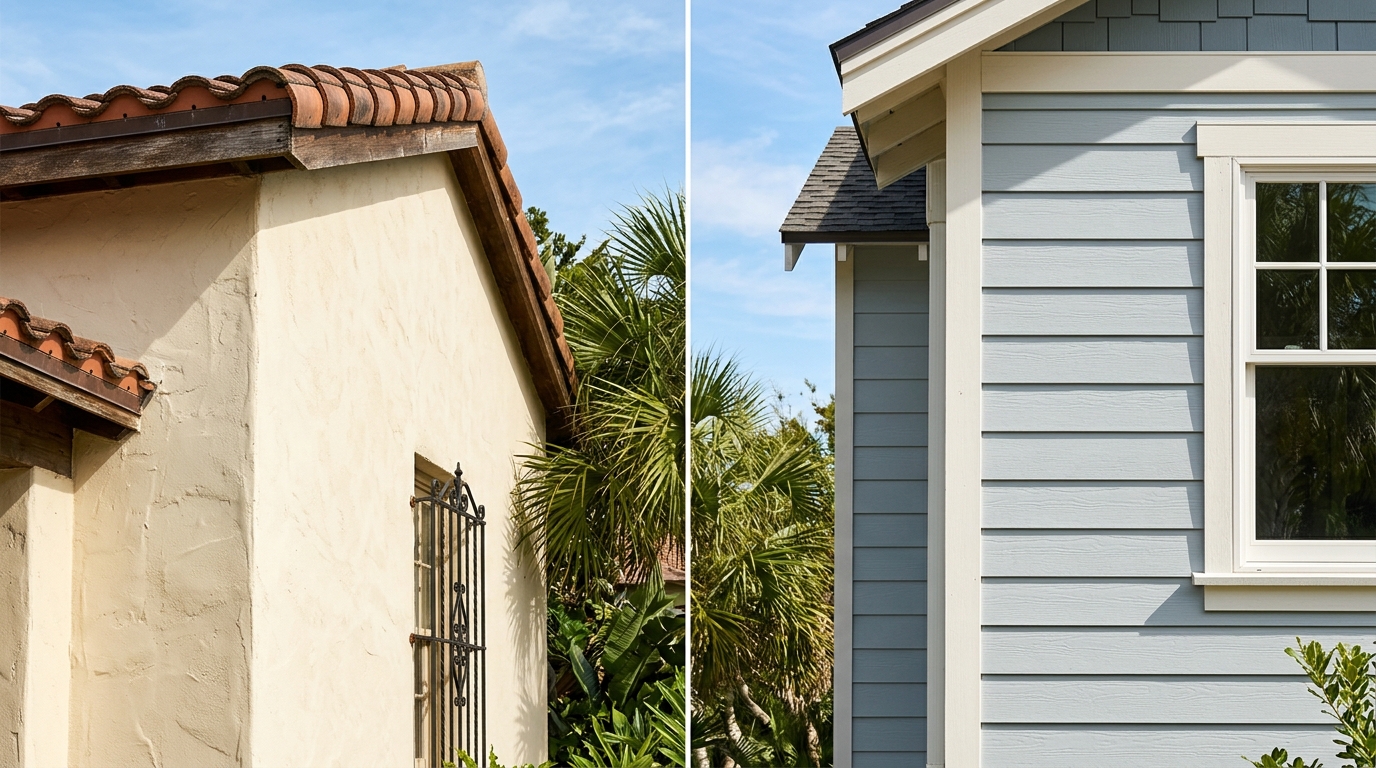
Choosing the right exterior cladding for a home in St. Augustine involves balancing aesthetic appeal with high performance against Northeast Florida’s unique climate. From relentless summer humidity and heavy downpours to salty coastal air near Vilano Beach or Anastasia Island, your exterior walls face severe environmental stress year-round.
When homeowners weigh their options for a new build or exterior renovation, the comparison usually comes down to stucco vs fiber cement siding Florida properties frequently feature. Understanding how each material performs against humidity, storms, and long-term upkeep helps you select the best protection for your St. Johns County home.
What Is Stucco Siding?
Stucco is a traditional, durable exterior finish made from a mixture of cement, sand, lime, and water, applied in multiple layers over a lath and framing base. In St. Augustine, famous for its historic Spanish colonial architecture and Mediterranean-inspired residences, has been a staple exterior choice for centuries.
Key Characteristics of Stucco
- Seamless appearance: Applied as a continuous wet mixture, stucco creates a smooth, monolithic exterior surface without visible seams or panel lines.
- Fire and impact resistance: The dense, cement-based composition provides exceptional fire resistance and solid physical durability against windblown debris.
- Thermal mass: Stucco helps moderate interior temperatures by absorbing and releasing heat slowly throughout the day.
What Is Fiber Cement Siding?
Fiber cement siding commonly known by popular brand names like James Hardie is an engineered exterior product composed of a mixture of cellulose fibers, Portland cement, sand, and water. Manufactured in rigid boards, panels, or shingles, it is factory-primed or pre-finished to mimic the look of traditional wood lap siding, board-and-batten, or shakes.
Key Characteristics of Fiber Cement Siding
- Engineered durability: Designed to resist warping, rotting, swelling, and pest damage, fiber cement provides a stable exterior skin that stands up well to humid climates.
- Design versatility: Available in a wide variety of textures, widths, and factory-applied baked-on colors that offer clean architectural lines.
- Dimensional stability: Unlike natural wood, fiber cement expands and contracts very little when exposed to extreme temperature swings and moisture fluctuations.
Stucco vs Fiber Cement Siding: Head-to-Head Performance in Florida
When evaluating stucco vs fiber cement siding Florida conditions test both materials across four vital performance areas:
- Moisture and Humidity Resistance: St. Augustine’s high humidity and heavy rainfall require superior moisture management. Traditional stucco is porous by nature and requires proper waterproofing barriers, weep screeds, and elastomeric coatings to prevent moisture absorption and cracking. Fiber cement is engineered to resist moisture intrusion and dimensional swelling, though cut edges and joints must be carefully sealed during installation.
- Wind and Storm Durability: Both materials offer excellent wind resistance when properly installed. Stucco provides a solid, heavy barrier against windborne debris, while fiber cement panels are rated to withstand high wind loads typical of coastal storm events.
- Maintenance and Upkeep: Stucco requires periodic inspection for hairline cracks, pressure washing to remove mildew, and occasional repainting with high-grade elastomeric paint to maintain its waterproof seal. Fiber cement siding requires very little day-to-day maintenance, though it will eventually need repainting every 10 to 15 years depending on sun exposure and paint finish quality.
- Aesthetic Style: Stucco delivers a smooth, textured, or Spanish-mission look that defines classic Florida architecture. Fiber cement offers crisp horizontal lap lines or vertical board-and-batten aesthetics suited for coastal transitional or craftsman-style homes.
Which Material Holds Up Better in St. Augustine?
Both materials can provide decades of reliable service in Northeast Florida when installed correctly, but the “better” choice depends on your architectural style and maintenance preferences:
- Choose Stucco if you want a seamless, traditional Mediterranean or Spanish-colonial aesthetic, value high thermal mass and fire resistance, and are comfortable with routine exterior inspections and occasional coating maintenance.
- Choose Fiber Cement Siding if you prefer the clean, distinct lines of lap or board-and-batten siding, want a material with high resistance to warping and moisture swelling, and desire a lower-maintenance exterior profile.
For homeowners dealing with weathered exterior surfaces or looking to upgrade worn-out siding, consulting a professional specializing in stucco repair St. Augustine and exterior cladding solutions ensures your home stays protected against the elements.
Frequently Asked Questions
Which material is more durable against coastal salt air in St. Augustine?
Both stucco and fiber cement hold up exceptionally well against coastal salt air compared to traditional wood or untreated metals. Because neither material rusts or rots easily from salt exposure, both are excellent choices for properties located near the ocean or bayfront.
How often do stucco and fiber cement siding need to be painted?
Stucco typically requires repainting every 5 to 10 years using high-quality elastomeric paint to bridge minor hairline cracks and maintain waterproofing. Fiber cement siding painted with factory-baked finishes can last 12 to 15 years or more before requiring a fresh coat of paint.
Can fiber cement siding be installed over existing stucco?
In most cases, installing fiber cement siding directly over existing stucco is not recommended. Proper installation requires inspecting the underlying framing and weather-resistive barrier, which usually involves removing damaged exterior layers to ensure a clean, moisture-tight wall assembly.
Does stucco crack easily in Florida’s climate?
Stucco can develop minor hairline cracks due to normal building settling or thermal expansion and contraction. However, structural cracks are typically prevented by using proper metal lath, control joints, and high-performance flexible exterior coatings.
Which option is more cost-effective for a home remodel?
Initial installation costs for stucco and fiber cement siding are often comparable, depending on the complexity of the home’s architecture, labor rates, and whether you are repairing existing stucco or installing new siding panels from scratch. Long-term costs depend on your willingness to perform routine stucco maintenance versus eventual repainting cycles for siding.