
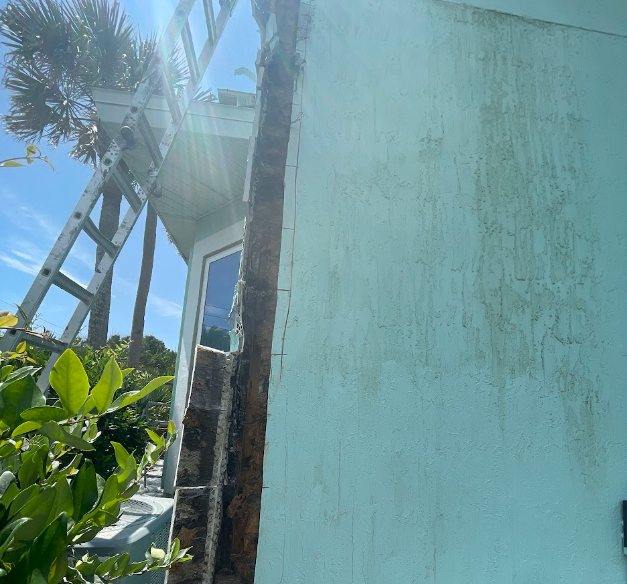
Stucco is one of the most common exterior finishes in St. Augustine for good reason, it handles heat well and looks great on the area’s coastal and Spanish Revival style homes. But the same climate that makes stucco popular here is also what slowly wears it down. Here is exactly how that happens.
Humidity Keeps Moisture in Contact With Stucco Longer
Stucco is porous by design, which normally lets it breathe. In St. Augustine’s year-round humidity, that same porosity means moisture from rain and coastal air stays in contact with the surface longer than it would in a drier climate, giving it more time to work into small cracks and behind the surface.
Salt Air Accelerates Surface Erosion
Homes closer to the coast deal with airborne salt particles that gradually wear away the outermost stucco layer, showing up as pitting, a sandy texture, or a worn finish faster than homes further inland. This is one of the most predictable patterns we see across St. Augustine’s coastal neighborhoods specifically.
Heat and UV Exposure Cause Thermal Movement
Stucco expands and contracts with Florida’s temperature swings between summer heat and cooler nights. Over years, that repeated movement stresses the material at its weakest points, usually around windows, doors, and corners, which is why cracks tend to show up in the same predictable spots on so many homes here.
Sudden Storms Cause Both Impact and Water Damage
Florida’s afternoon storms bring both wind-driven debris impact and heavy rain in a short window. A stucco wall that already has a small crack can take on a surprising amount of water during one of these storms, which is often when a minor issue turns into a visible problem overnight. Learn more about Why Stucco Cracks Keep Coming Back After a DIY Patch in St. Augustine
Frequently Asked Questions
How often should stucco be inspected in a St. Augustine climate?
An annual visual check is a reasonable baseline, with a closer look after any major storm season, since that is when small existing issues are most likely to turn into visible damage.
Does stucco color affect how much heat and sun damage it takes?
Darker colors absorb more heat and tend to show fading and stress cracking sooner than lighter, more reflective colors, which matters more here than in cooler climates.
Can weather damage be prevented, or only repaired after it happens?
Proper installation, sealing, and gutters that direct water away from the walls all reduce how much damage the climate causes over time, though no stucco is completely immune to St. Augustine’s weather long term.
Protect Your St. Augustine Home’s Stucco
Our St. Augustine stucco repair team knows exactly which of these patterns to look for on a home in this climate. See recent projects and read what local homeowners say on our Google Business Profile.