
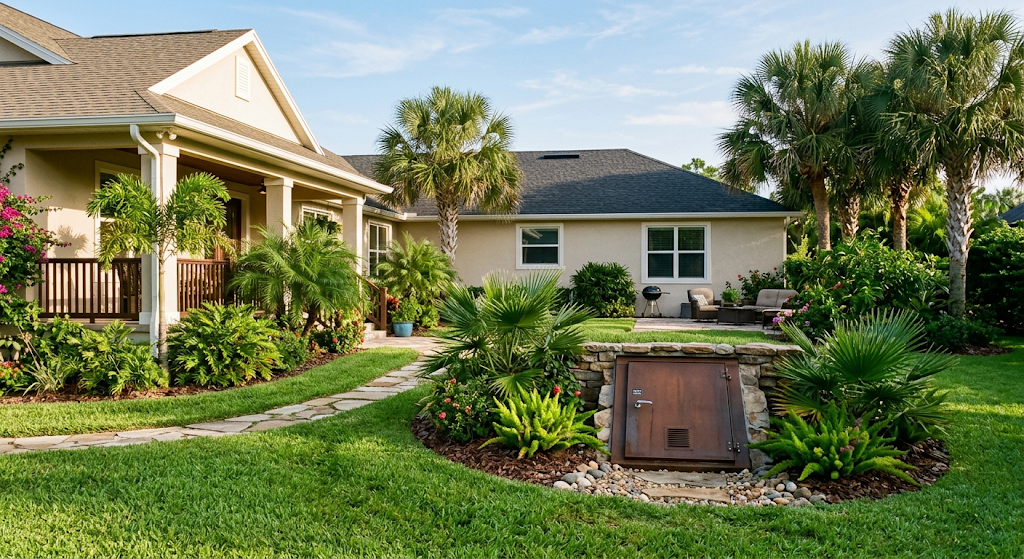
If you spend time browsing local Florida weather forums and regional discussion boards, you will see plenty of homeowners asking how to protect their families during severe tropical storm seasons without buying a brand-new house. When residents look into retrofitting or installing a brand-new storm shelter St. Augustine property owners often wonder if it is even possible to bury a heavy vault into an established lawn without tearing up their existing driveway, patio, or main foundation walls.
The short answer is yes, you can add an underground or above-ground shelter to an existing property, but it takes careful planning. When managing subterranean construction St. Augustine projects on established lots, contractors have to work around existing utility lines, mature landscaping, and our local high water table.
Unlike new construction where a shelter vault is dropped into an open excavation pit before framing begins, retrofitting an existing yard requires delicate site access and precision excavation to avoid disturbing your home’s stem wall or underground plumbing feeds.
Overcoming Backyard Excavation and Soil Challenges
Digging a massive hole right next to an existing house can be tricky. In St. Augustine, our sandy soil and shallow groundwater mean that open excavation pits can easily destabilize if they are not properly shored up or dewatered during installation.
Local property owners on community threads frequently discuss the logistics of getting heavy backhoes and crane trucks past backyard fences and sprinkler lines.
Key considerations for retrofitting an existing lot include:
- Utility Locating and Hand Digging: Clearing underground water lines, gas mains, and electrical feeds before any mechanical excavation starts.
- Groundwater Management: Setting up temporary pumps to keep the excavation pit dry while anchoring the concrete or steel shelter vault.
- Surface Restoration: Rebuilding damaged sod, irrigation lines, and patio pavers once the heavy earthwork is complete.
Protecting Your Home and Family With Engineered Solutions
Adding a secure refuge to your existing homestead provides immense peace of mind when hurricane warnings pop up. Working with licensed local builders ensures your installation meets strict Florida wind-load and anchoring standards. Learn more about How Much Underground Space Is Needed for a Florida Safe Room
Frequently Asked Questions
Can an in-ground storm shelter be installed directly under a garage floor?
Retrofitting an in-ground shelter inside an existing garage requires cutting through the concrete slab and excavating soil beneath the roofline, which is structurally complex but doable with professional shoring.
Will an underground shelter flood if the power goes out?
Most prefabricated steel and concrete shelters feature dual-seal hatches and engineered drainage or sump options to prevent water intrusion during heavy downpours.